Show Us the Learning with Teaching Portfolios
Watching teaching is relatively straightforward. But identifying authentic student learning in a classroom setting is harder because it’s not always easy to see. Although people often point to grade reports and test scores, when do “aha” moments of student learning actually happen in the classroom? And how do you demonstrate to people outside of your classroom when these key moments actually happened. How do we make student learning more visible?
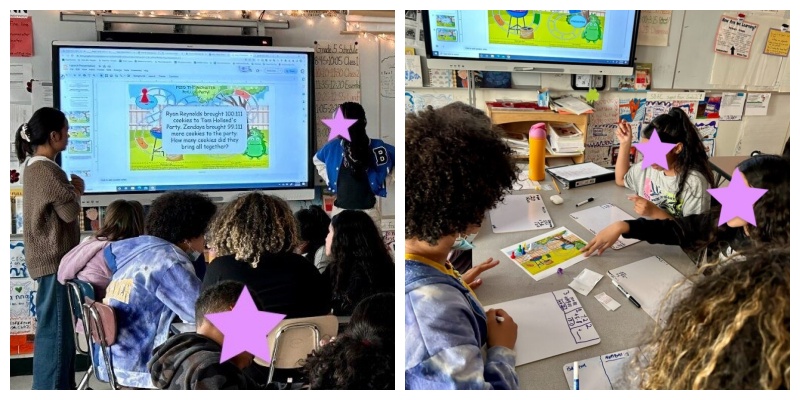
“Show Us the Learning” is one of my mantras when working with novice teachers, and one of the best strategies I can offer is to guide them in creating online teaching portfolios. In my Educ 350: Teaching and Learning course in 2023, Trinity students designed and taught three inquiry-based math or science workshops requested by Grade 3-7 teachers at two partnering Hartford public schools. To document their intellectual work as newer teachers, Trinity students created portfolios of their lesson plans, featuring selected images and edited video clips of student learning in their classrooms, as well as personal reflections on what worked and what they might do differently next time. Although some people mistakenly believe that younger generations are “digital natives” who already know these skills, assigning online portfolios required training in new skills. In addition to peer review and my feedback on their draft narratives, I taught strategies to record long video on smartphones, editing short clips to upload to streaming services, and guided them using my WordPress tutorial to integrate text and visuals on their individual websites.
Making our thinking more visible to others became the course’s central theme. In one of our core readings, Peter Liljedahl in Building Thinking Classrooms in Mathematics offers ways to make students’ mathematical thinking more visible, such as using vertical non-permanent writing surfaces (or whiteboards) to illustrate different approaching to problem-solving. In the same way, online teaching portfolios make our pedagogical thinking more visible to illustrate our different approaches to our craft as educators and our goal of deeper learning with our students. Also, sharing teaching portfolios on the public web – with safeguards to maintain individual student privacy – helps novice teachers share their skills with graduate schools, future employers, and other educators across the globe.
See this sample teaching portfolio by Trinity College student Jess Cruz, who designed and led a series of mathematics workshops on adding and subtracting decimals with 5th grade students. In Jess’s final workshop, her class played two different math games, each using word problems written by students, to compare differences between the games and help them reflect on which strategy most helped them improve their learning. For more sample teaching portfolios, see my summary of the Spring 2023 course with screenshots and links.